
About Us
An infrastructure business, not a software one
BizliPoint supplies, installs, operates and maintains EV charging equipment across India — and develops its own charging sites alongside that. We assess what a site can carry, build it, and keep it running.
Who we are
How we think about the network
India’s shift to electric mobility is well underway, but charging infrastructure has not spread evenly. Metro corridors are increasingly well served. A great deal of the country is not — and the commercial operators who would benefit most from electrification are often the ones with the least reliable access to charging.
BizliPoint exists to close that gap. We supply and install charging equipment for businesses, fleets, commercial property and housing societies across India, operate it so drivers can pay for sessions, and service it afterwards. We also develop and run charging sites of our own.
A charging business is won or lost on local detail — which road a site sits on, what the electrical supply can carry, whether the gate is open at 11pm. Scale comes from getting those specifics right site by site, not from drawing a bigger map.
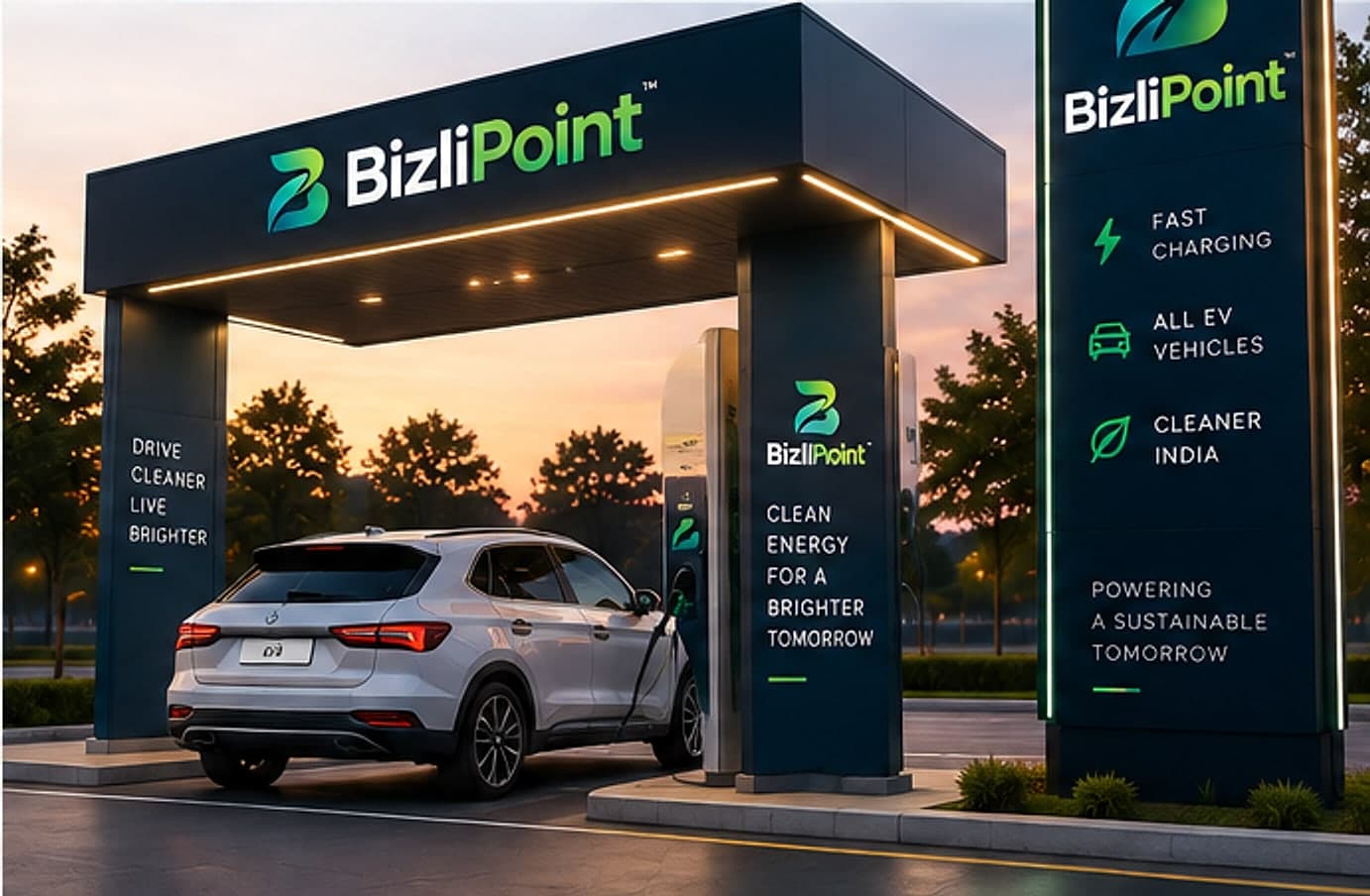
What BizliPoint supplies and installs
- Charge point range supplied
7.4–240kW
Charge point range supplied
From Type 2 AC through to high-power DC fast charging.
- Connector standards
CCS2/ Type 2
Connector standards
The standards used by most EVs sold in India today.
- Network integration
OCPP
Network integration
Open-protocol charge points, so your site is never locked in.
- Where we install
India
Where we install
Businesses, fleets, property and housing societies nationwide.
Mission & vision
What we are trying to build
Our mission
To make charging an electric vehicle in India an ordinary, unremarkable thing to do — by putting charge points where people actually park, and keeping them in service.
Our vision
A charging network dense enough that drivers and commercial operators stop planning journeys around where they can charge.
Our approach
How we actually work
Four things we hold to, because each of them is a way charging projects commonly go wrong.
- 01
One party accountable, end to end
We supply the equipment, install it, connect it and service it. Charging projects usually fail in the gaps between the company that sold the hardware, the one that wired it in and the one that was meant to fix it. There are no gaps if it is all the same party.
- 02
Feasibility before commitment
Electrical capacity, access, visibility and expected demand are assessed before anything is specified. A site that cannot be energised sensibly is not a site, however good it looks on a map.
- 03
Operations are part of the scope
Running charge points after commissioning is part of how the business works, not an afterthought. A charger that was installed and then abandoned does more damage to EV adoption than no charger at all.
- 04
We describe what exists
Our site states what we operate today and what is still in development, and keeps the two clearly apart. You will not find invented uptime figures or customer counts here.
Where we are going
Operational footprint and growth strategy
Today
Supplying and installing AC charge points from 7.4 kW to 22 kW and DC fast charging up to 240 kW on CCS2 and Type 2 connectors, with annual maintenance contracts for the equipment we put in. Charge points are operated through an established charging network platform, so drivers start and pay for sessions through tools they already use.
Next
Expanding across India’s cities and commercial transport corridors, prioritising locations with genuine charging demand, workable electrical capacity and partners who want charging on their site. Specific locations are published only once they are confirmed.

Let's get a charge point earning for you.
Whether you are investing and need a location, already have a site, or have land to offer — tell us which, and we can take it from there.
Prefer to talk? +91 82095 22811